
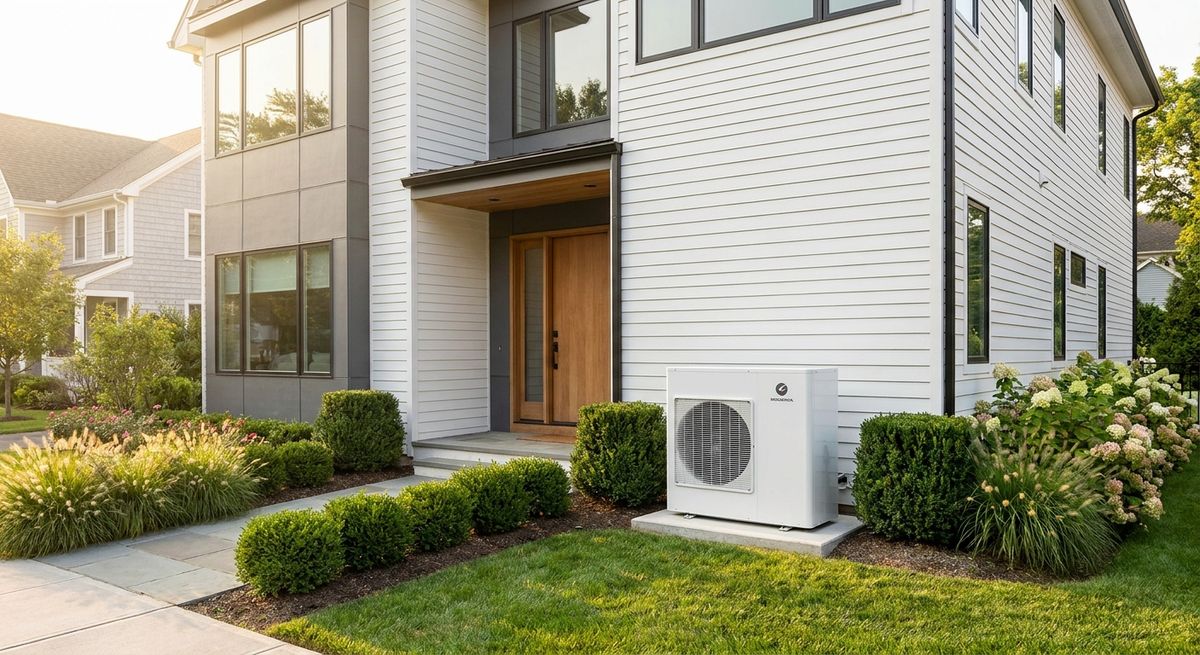
Residential HVAC system types
Back to Blog HVAC TIPS

Types of Residential Heating and Cooling Systems: Complete Guide

Apr 15, 2026 8 min read Alex Weber
Quick Read

This article covers:

  • The 6 main residential HVAC system types and how each works
  • Head-to-head comparison: efficiency, cost, lifespan, and comfort
  • Which systems work best for NYC's climate and building types
  • Installation costs for each system type (NYC pricing)
  • How to match the right system to your home's specific needs

Estimated read time: 5 minutes.

Choosing a heating and cooling system for your home is one of the biggest investments you'll make — typically $5,000 to $25,000 installed, with operating costs of $1,200 to $3,600 per year for the next 15 to 25 years. Get it right, and you'll enjoy efficient comfort for decades. Get it wrong, and you'll overpay every month while fighting hot spots, cold rooms, and premature breakdowns.

The challenge: there are more system types available today than ever before. Central air, furnaces, boilers, heat pumps, ductless mini-splits, VRV/VRF systems, and hybrid combinations — each with different strengths, weaknesses, and ideal applications. And what works perfectly in a Texas ranch house may be completely wrong for a Brooklyn brownstone.

This guide breaks down every major residential HVAC system type with honest pros, cons, and NYC-specific pricing — so you can make an informed decision instead of relying on whichever contractor happens to show up first.

Warning Sign #01

1. Central Air Conditioning + Gas Furnace

The traditional setup: a gas furnace handles winter heating while a central air conditioner handles summer cooling. Both share the same ductwork and air handler. It's the most common system in the US, well-understood by every HVAC contractor, and reliable — but it uses two separate pieces of equipment and relies on natural gas, which faces increasing regulation in NYC.

Heating efficiency: 80–98% AFUE (depends on furnace model)
Cooling efficiency: 14–22 SEER2
Lifespan: 15–20 years for each unit
Installation cost: $7,000–$15,000 (both units)
Annual operating cost: $2,000–$3,200
Best for: homes with existing ductwork and gas service
Requires: gas line, ductwork, outdoor condenser pad
Warning Sign #02

2. Heat Pump (Air-Source)

A heat pump heats AND cools with one system by reversing the refrigerant cycle — extracting heat from outdoor air in winter and removing heat from indoor air in summer. Modern cold-climate heat pumps work efficiently down to -15°F, making them viable for NYC winters. They use electricity only, require no gas line, and qualify for up to $2,000 in federal tax credits.

Heating efficiency: 250–400% (COP 2.5–4.0)
Cooling efficiency: 15–22 SEER2
Lifespan: 15–20 years
Installation cost: $8,000–$18,000
Annual operating cost: $1,200–$2,200
Best for: new construction, gas-to-electric conversions, climate-conscious homeowners
Requires: ductwork (or ductless indoor units), outdoor unit space, 200-amp electrical panel
Warning Sign #03

3. Boiler + Radiators (Hydronic)

Boilers heat water and distribute it through radiators, baseboard heaters, or in-floor radiant tubing. They provide exceptionally even, comfortable heat without blowing air (no drafts, no dust circulation). Very common in older NYC buildings. However, boilers only heat — you still need a separate cooling system.

Heating efficiency: 80–98% AFUE
Cooling: requires separate AC system
Lifespan: 20–30 years (longest of any system)
Installation cost: $5,000–$12,000 (boiler only)
Annual heating cost: $1,500–$2,800
Best for: older homes with existing radiators, comfort purists
Requires: gas line or oil tank, radiators or radiant piping, separate AC if cooling needed
Warning Sign #04

4. Ductless Mini-Split Systems

Ductless mini-splits connect an outdoor compressor to one or more indoor wall-mounted units via refrigerant lines — no ductwork needed. Each indoor unit has its own thermostat, providing true zone control. They're the go-to solution for homes without ductwork, additions, converted attics, and supplemental heating/cooling for problem rooms.

Heating efficiency: 250–400% (COP 2.5–4.0, same as heat pump)
Cooling efficiency: 17–33 SEER2 (highest available)
Lifespan: 15–20 years
Installation cost: $3,500–$8,000 per zone (1–4 zones)
Annual operating cost: $800–$1,800
Best for: no-ductwork homes, room additions, zone comfort control
Requires: exterior wall for refrigerant lines, outdoor unit space
Warning Sign #05

5. VRV/VRF (Variable Refrigerant Volume/Flow)

VRV/VRF systems are the premium multi-zone solution: one large outdoor unit supports up to 30+ indoor units of various styles (wall-mounted, ceiling cassette, ducted, floor-standing). Each zone is independently controlled, and heat recovery models can heat one room while cooling another simultaneously. Originally commercial technology, now available for large residential applications.

Heating efficiency: 300–500% (COP 3.0–5.0, highest available)
Cooling efficiency: 20–30+ SEER2
Lifespan: 15–25 years
Installation cost: $20,000–$45,000 (whole-home)
Annual operating cost: $900–$1,600
Best for: large homes, multi-family, renovations requiring maximum zone control
Requires: professional sizing, outdoor unit space, 200-amp panel
Warning Sign #06

6. Hybrid (Dual-Fuel) Systems

A hybrid system pairs an electric heat pump with a gas furnace. The heat pump handles heating when outdoor temperatures are above 35–40°F (when it's most efficient), and the furnace takes over during deep cold snaps. This gives you the efficiency of a heat pump 80% of the time with the reliable heat output of gas on the coldest days.

Heating efficiency: 250–400% (heat pump mode), 80–98% AFUE (furnace mode)
Cooling efficiency: 15–22 SEER2
Lifespan: 15–20 years
Installation cost: $10,000–$20,000
Annual operating cost: $1,400–$2,400
Best for: cold climates with existing gas service, homeowners wanting efficiency + backup reliability
Requires: gas line, ductwork, outdoor unit, dual-fuel thermostat
The NYC Building Factor

New York City's building stock creates unique HVAC constraints that don't apply in most US markets. Pre-war buildings rarely have ductwork — making ductless mini-splits or VRV systems the only practical options without major renovation. Local Law 154 (2021) bans gas in new construction starting 2026, pushing new buildings toward all-electric heat pump solutions. Co-op and condo boards often restrict outdoor unit placement, requiring creative installation approaches. Always verify building rules before choosing a system.

INSTALLED COST FOR A 2,000 SQFT NYC HOME

What Each System Costs Installed

Ductless Mini-Split (3 zones)$10,000–$20,000
Central AC + Gas Furnace$7,000–$15,000
Heat Pump (Ducted)$8,000–$18,000
Hybrid Dual-Fuel System$10,000–$20,000
VRV/VRF Whole-Home System$20,000–$45,000

* NYC metro area pricing, 2024–2025. Includes equipment, labor, permits, and basic ductwork/piping. Costs vary significantly by building type and access.

Heat Pump vs. Furnace + AC

Heat Pump System (Recommended)
One system handles both heating and cooling
Operating costs 30–50% lower than gas furnace + AC
No gas line required — all-electric operation
Federal tax credits up to $2,000 available
Cold-climate models work down to -15°F
Future-proof: compliant with NYC's electrification goals
Furnace + AC (Not Recommended for New Installs)
Two separate systems to maintain and eventually replace
Higher combined operating costs ($2,000–$3,200/year)
Requires gas line — banned in NYC new construction from 2026
No federal tax credits for gas furnaces
Gas furnace produces carbon monoxide — requires CO detectors
Declining resale value as market shifts to electric systems

How to Choose the Right System for Your Home

The “best” HVAC system depends entirely on your specific situation. Here's how to narrow it down:

  • If you have ductwork: A ducted heat pump is the most cost-effective choice for new installations. Lower operating costs, tax credits, and single-system simplicity make it hard to beat. If you want backup gas heat for extreme cold, consider a hybrid dual-fuel system.
  • If you don't have ductwork: Ductless mini-splits are the clear winner. No demolition, no ceiling drops, no lost closet space. Each room gets its own zone with independent temperature control. For larger homes (4+ zones), consider upgrading to a VRV/VRF system for better efficiency and more indoor unit options.
  • If you have radiators/baseboard heat: Keep your boiler system for heating (radiant heat is incredibly comfortable) and add ductless mini-splits for cooling. This gives you the best of both worlds: even, draft-free heat in winter and efficient cooling in summer without installing ductwork.
  • If you want maximum comfort and efficiency: A VRV/VRF system provides the most precise temperature control, the highest efficiency ratings, and the most indoor unit flexibility. The higher upfront cost is offset by the lowest operating costs of any system type. Ideal for new construction, gut renovations, and larger homes.

One factor many homeowners overlook: ductwork condition. If your home has old, leaky ducts, even the most efficient furnace or heat pump will waste 20–30% of its output through duct losses. Before investing in new equipment, have your ductwork inspected and sealed — or consider going ductless entirely.

The most expensive HVAC system is the one that doesn't fit your home. A $45,000 VRV system in a 900-sqft apartment is overkill. A $7,000 single-zone furnace in a 4,000-sqft colonial is torture. Right-sizing matters more than brand names or SEER ratings.
Federal Tax Credits for Heat Pumps (2024–2032)

The Inflation Reduction Act provides up to $2,000 in federal tax credits for qualifying heat pump installations (air-source heat pumps meeting CEE highest efficiency tier). This is an annual credit — not a one-time lifetime limit. Combined with state and utility rebates, many NYC homeowners offset 30–45% of their heat pump installation cost. Gas furnaces, boilers, and standard AC systems do NOT qualify. This credit alone can make a heat pump cheaper than a furnace + AC combo after incentives.

RESIDENTIAL HVAC SYSTEMS

Frequently Asked Questions

Find answers to common questions about our HVAC, plumbing, and refrigeration services.

VRV/VRF (Variable Refrigerant Volume) systems offer the highest efficiency ratings available: COP up to 5.0 for heating (500% efficient) and SEER2 ratings above 30 for cooling. For more common residential applications, cold-climate heat pumps achieve COP 2.5–4.0, significantly outperforming gas furnaces (max 98% AFUE = COP 0.98). Any heat pump-based system will outperform any combustion-based system in total energy efficiency.

Yes. Modern cold-climate heat pumps (also called hyper-heat or extreme cold models) maintain full heating capacity down to 5°F and continue operating down to -15°F. NYC's average winter low is 26°F — well within any cold-climate heat pump's optimal range. The outdated belief that heat pumps don't work in cold weather is based on 1990s-era technology and no longer applies to current equipment.

If your home already has well-sealed ductwork, central air (preferably a ducted heat pump) is usually more cost-effective. If your home lacks ductwork, adding ducts costs $3,000–$7,000+ and sacrifices ceiling height and closet space. In that case, ductless mini-splits are the smarter choice: no ductwork needed, higher efficiency (no duct losses), independent zone control per room, and typically faster installation.

With proper maintenance: gas furnaces last 15–20 years, central AC units last 15–20 years, heat pumps last 15–20 years, boilers last 20–30 years (longest lifespan), and ductless mini-splits last 15–20 years. Without maintenance, expect roughly half these lifespans. The single biggest factor in HVAC longevity is regular professional maintenance — annual tune-ups extend equipment life by 40–60%.

NYC installation costs are 20–40% higher than the national average due to labor rates, permitting, and building access challenges. Typical ranges for a 2,000 sqft home: central AC + furnace ($7,000–$15,000), ducted heat pump ($8,000–$18,000), ductless mini-splits for 3 zones ($10,000–$20,000), and VRV/VRF whole-home ($20,000–$45,000). Federal tax credits of up to $2,000 for heat pumps can offset a significant portion of the cost.

Limited Availability

Find the Right System for Your Home — Free Consultation

Every home is different, and the right HVAC system depends on your building, your budget, and how you live. We'll assess your home, explain your options honestly, and help you choose the system that delivers the best comfort, efficiency, and value for your specific situation.

Alex Weber

Marketing and Sales dept