
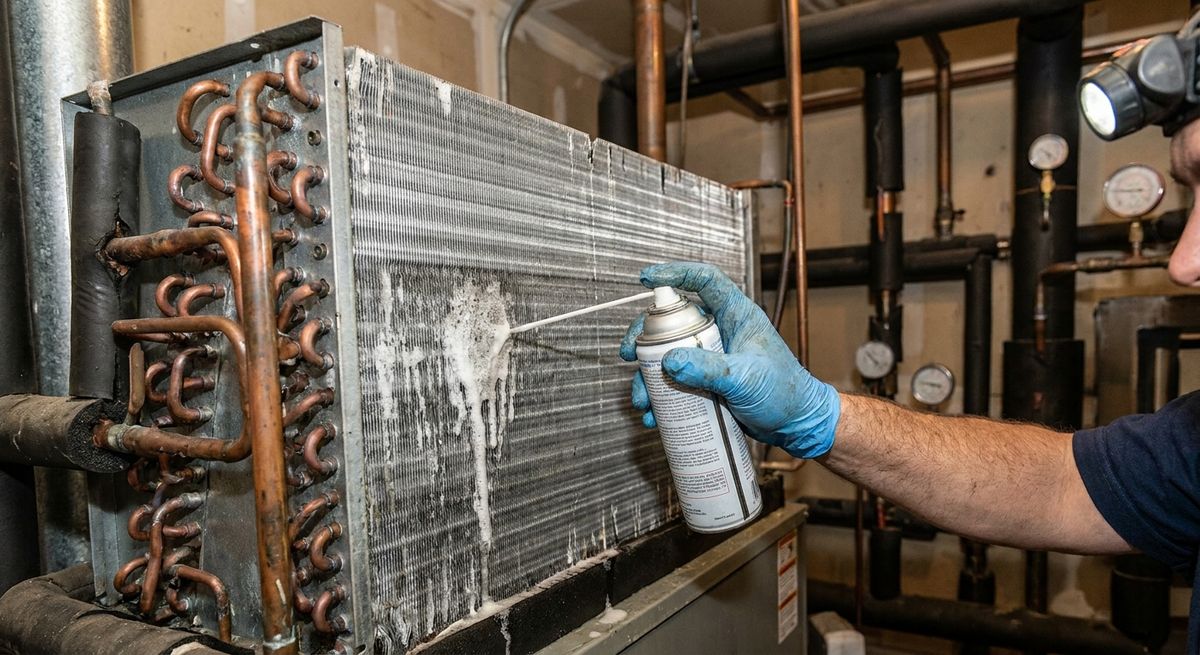
Your HVAC system has two sets of coils that make cooling and heating possible. The evaporator coil (indoor) absorbs heat from your space, and the condenser coil (outdoor) releases that heat outside. Together, they're the engine of your entire system — and when they get dirty, everything degrades.
Dirty coils are the most common — and most overlooked — cause of HVAC inefficiency. A layer of dust, dirt, or biological growth as thin as 1/100th of an inch reduces heat transfer by 5%. After a year without professional maintenance, that efficiency loss climbs to 20–40%, meaning your system works harder, runs longer, and costs significantly more to operate — all while delivering less comfort.
This guide explains exactly how coil fouling happens, how to recognize it, and what professional coil cleaning involves — so you can protect the most critical components of your HVAC system.
